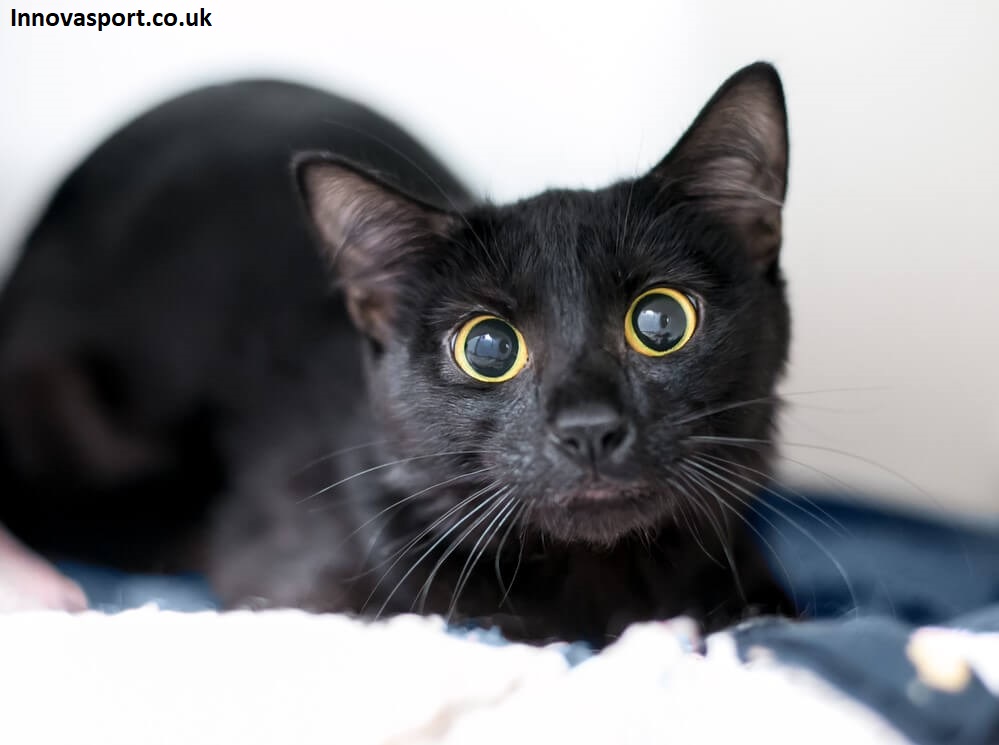
Why Do Cats Pupils Get Big? A cats pupils are remarkably expressive, constantly shifting in size and shape to reflect both the environment and the animal’s emotional state.
The most straightforward reason for pupil dilation is light — in dim or dark conditions, a cat’s pupils expand dramatically to allow as much light as possible into the eye, which is a key part of what makes cats such exceptional nighttime hunters.
However, light is far from the only trigger.
When a cat becomes excited, playful, or is preparing to hunt or pounce, its pupils widen rapidly as the brain signals the eyes to gather more visual information about the surrounding environment.
Fear and stress produce a similar response, as dilated pupils are a core component of the fight or flight reaction, preparing the cat to either confront a threat or escape from it as quickly as possible.
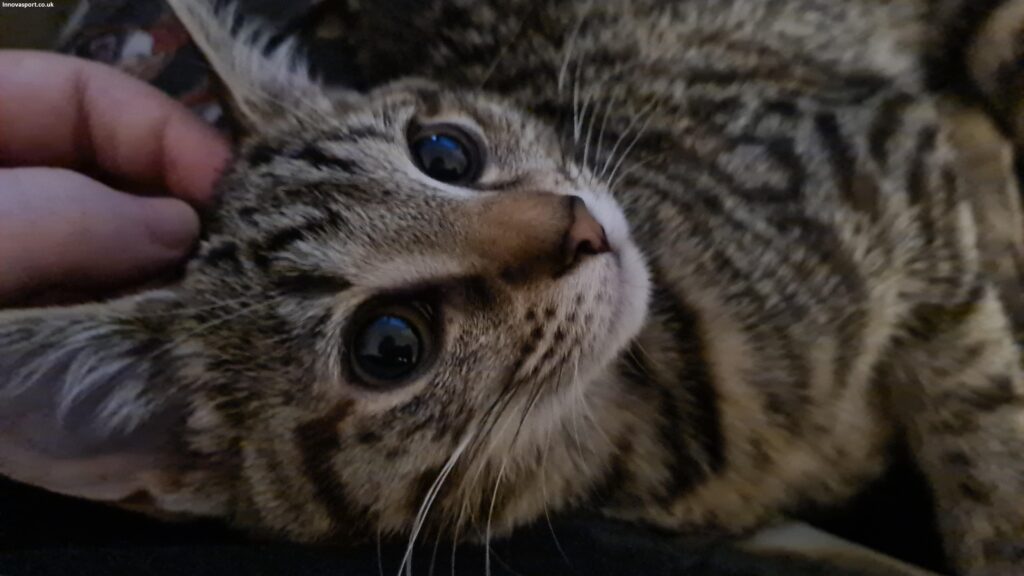
Interestingly, pupil dilation can also occur during moments of affection and deep relaxation, when a cat feels completely safe and content in the presence of its owner.
Table of Contents
Quick Table
| Cause | What It Means | What To Do |
|---|---|---|
| Low Light Conditions | Pupils expand to improve night vision | Normal response, no action needed |
| Excitement or Play | Brain signals eyes to gather more visual info | Engage and enjoy playtime with your cat |
| Fear or Stress | Fight or flight response triggered | Identify and remove the stressor |
| Affection and Relaxation | Cat feels safe, content, and comfortable | Enjoy the bonding moment |
| Pain or Discomfort | Body responding to physical distress | Monitor and consult a vet |
| High Blood Pressure | Underlying medical condition affecting eyes | Immediate veterinary attention needed |
| Neurological Issues | Brain or nerve signal disruption | Urgent veterinary evaluation required |
| Drug or Toxin Exposure | Chemical reaction affecting pupil control | Emergency veterinary care immediately |
Why do cats’ pupils get big?
My cat Mochi used to terrify me whenever she’d suddenly lock eyes with me from across the room — pupils blown wide open like two black dinner plates.
I’d literally freeze, not knowing if she was about to launch herself at my feet or just… be weird. Turns out, I had no idea what I was actually looking at.
Once I started paying more attention (and eventually read a lot about it), I realized those big, dark eyes are basically a full conversation happening in real time.
Cats use their pupils to communicate more than most people realize — and once you learn to read them, it changes how you see your pet entirely.
So let’s break it all down, from the biology to the “okay, should I be worried?” moments.
First — how a cat’s pupil actually works
A cat’s pupil is shaped differently from ours. Humans have round pupils. Cats have vertical slit pupils that can open into a nearly perfect circle when fully dilated.
This design gives them extraordinary control over how much light enters the eye — way more precision than we have.
Slit pupil
Bright light
Round pupil
Moderate light
Fully dilated
Dark or high emotion
Quick biology note: The iris muscle that controls pupil size is controlled by both the nervous system and ambient light levels.
That means emotion and environment both play a role — which is why you can’t always blame “dark room” for big pupils.
The main reasons your cat’s pupils get big
Low light conditions
This is the most straightforward one. In dim rooms, a cat’s pupils open wide to let in as much light as possible.
Cats are crepuscular — meaning they’re most active at dawn and dusk — so their eyes are built to gather maximum light. If you walk into a darkened room and your cat looks at you with huge pupils, it’s just physics doing its thing.
Excitement and hunting mode
Here’s the one that surprised me the most with Mochi. When she’s in “prey drive” mode — stalking a toy, watching a bird outside, or about to charge after nothing — her pupils blow wide. It’s adrenaline.
The sympathetic nervous system kicks in, triggering mydriasis (the technical term for pupil dilation). Even if the “prey” is just a crinkled piece of paper, the body responds the same way.
Fear or stress
Big pupils are a huge fear signal. When a cat is scared, startled, or feeling threatened, dilation happens as part of the fight-or-flight response.
Watch the rest of the body too: flattened ears, crouched posture, puffed tail — if you see those alongside wide pupils, your cat is genuinely frightened and needs space, not cuddles.
Affection and arousal (yes, really)
A 2023 study actually found that cats show dilated pupils when interacting positively with their owners. So those big, soft eyes when your cat is kneading your lap?
That’s a good sign. It’s emotional arousal — in a totally wholesome sense. The tricky part is distinguishing this from fear, which is why you have to read the full body language picture.
Pain or illness
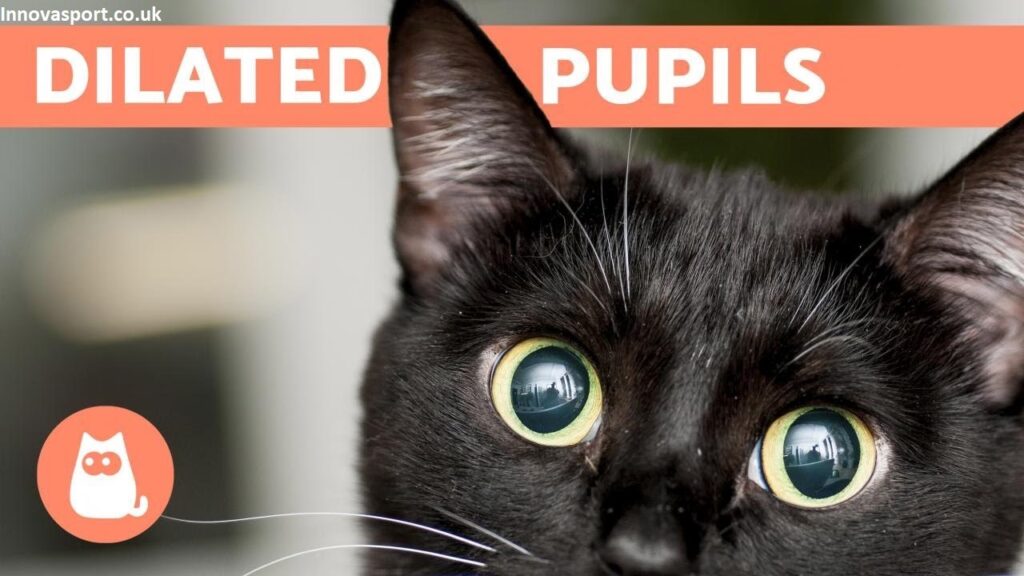
This is the one you need to watch carefully. Persistent dilation that doesn’t respond to light changes, or pupils that are two different sizes (called anisocoria), can signal a serious medical issue — high blood pressure, neurological problems, poisoning, or eye disease.
If your cat’s pupils seem stuck wide open for hours and you haven’t changed the lighting or situation, that’s a vet call.
Medications or substances
Some topical eye drops (especially atropine used by vets during exams) cause temporary dilation. Catnip also causes a brief dilation effect in susceptible cats. If your cat just had a vet visit or a catnip session, that’s likely the culprit.
How to actually read what your cat is saying
The mistake I kept making early on was looking at pupil size in isolation. It’s like trying to understand a sentence by only reading one word. You have to look at the whole “body language sentence” at once.
Here’s a rough guide I’ve built up over time from observing Mochi and reading what actual behaviorists say:
- Big pupils + relaxed body + slow blink — Your cat is content and comfortable with you. Blink back slowly. Seriously, it works.
- Big pupils + crouched body + flattened ears — Scared or defensive. Back off, give space, speak softly.
- Big pupils + wiggling rear end + focused stare — Full hunting mode. Get a toy involved before your ankles become the target.
- Big pupils + puffed tail + arched back — Overstimulated or threatened. Stop whatever you’re doing immediately.
- Big pupils + vocalizing + seeming disoriented — Possible medical issue. Note when it started and call your vet.
- One big pupil, one small pupil — This is a red flag. Anisocoria can mean neurological issues. Vet, now.
The “Mochi incident” that taught me to pay attention
I want to share a story that still makes me feel a little guilty. About a year into having Mochi, she started having episodes where her pupils would be enormous and she’d move around the apartment in this stiff, weird way.
I chalked it up to being “zoomies” for a while.
It wasn’t until I took a video and showed my vet that we figured out she was having mild hypertensive episodes.
Her blood pressure was elevated, and the dilated pupils were one of the signs. She’s on medication now and doing great, but I wish I’d paid attention sooner instead of dismissing it as “cats being cats.”
The lesson: If something seems off and the dilation isn’t explained by lighting, emotion, or a recent vet visit — don’t wait. Document it with a quick phone video and show your vet. It takes 30 seconds and could genuinely matter.
Common mistakes cat owners make
Honestly, most of us make at least one of these at some point:
- Assuming big pupils always means “playful” — sometimes it’s fear, and approaching a scared cat can get you scratched.
- Ignoring asymmetric pupils — one dilated eye vs. one normal eye is almost never fine. Don’t rationalize it.
- Forcing interaction when pupils are dilated from stress — you’ll make it worse. Let the cat come to you.
- Staring directly into your cat’s eyes — sustained direct eye contact reads as a threat. Soft gaze and slow blinks are much kinder.
- Mistaking overstimulation for affection — a cat who’s been petted too long may show dilated pupils right before they bite or scratch. It’s a “stop” signal, not a “more please.”
When to actually see the vet
I don’t want to make everyone anxious about every pair of big eyes, but here are the actual situations where you should pick up the phone:
See a vet if: Pupils stay dilated for several hours regardless of lighting changes · One pupil is noticeably larger than the other · Your cat seems confused, uncoordinated, or is bumping into things ·
Dilation is accompanied by vomiting, lethargy, or loss of appetite · You suspect your cat got into something toxic (certain plants, medications, chemicals)
The “slow blink” trick that actually works
One genuinely useful thing I’ve learned: if your cat has big, slightly tense-looking pupils and you’re trying to calm them down, try the slow blink.
Make eye contact briefly, then slowly close your eyes and open them. It’s a signal cats use to communicate that they’re not a threat.
Mochi took about three weeks to reliably slow-blink back at me. Now she does it from across the room unprompted, and every time, I feel unreasonably proud of both of us.
Understanding what your cat’s eyes are saying isn’t about being some whisperer-level cat expert. It’s just about slowing down and noticing.
Cats are actually pretty communicative — we’re just not always paying attention to the right signals. Once you start reading the pupils as one piece of a bigger picture, you’ll realize your cat’s been talking to you all along.
FAQ’s
Is it normal for a cat’s pupils to be different sizes?
Occasionally uneven pupils, known as anisocoria, can occur temporarily due to minor irritation or injury. However, persistently uneven pupils are a serious warning sign that should never be ignored. They can indicate neurological damage, eye disease, or a serious underlying health condition that requires immediate veterinary evaluation.
Why do my cat’s pupils get big when we play?
During play, your cat’s brain enters a heightened state of alertness and excitement that mirrors its natural hunting instincts. The pupils dilate automatically to maximize visual input, helping your cat track movement more accurately and react faster — exactly the same response it would have when stalking prey in the wild.
Can big pupils mean my cat is happy?
Yes, in certain contexts. Softly dilated pupils during calm, quiet moments of affection and closeness often indicate that your cat feels deeply relaxed, safe, and content. However, context is everything — big pupils during tense or startling situations carry a completely different emotional meaning and should be read alongside your cat’s overall body language.
How do I know if my cat’s dilated pupils are a medical emergency?
Seek immediate veterinary attention if your cat’s pupils are persistently and fully dilated regardless of light conditions, if the pupils are uneven in size, if your cat appears disoriented or confused, or if the dilation is accompanied by other symptoms such as lethargy, loss of appetite, or unusual behavior.
Do all cats have pupils that change shape the same way?
Most domestic cats share the same vertical slit pupil structure that expands into a large round shape in low light or emotional states. However, the degree and speed of pupil change can vary between individual cats based on age, breed, temperament, and overall health condition.
Conclusion
A cat’s pupils are among the most revealing and fascinating windows into its inner world, reflecting everything from the level of light in the room to the deepest corners of its emotional state.
Understanding why your cat’s pupils get big is about far more than satisfying curiosity — it is about building a deeper, more meaningful connection with your feline companion and becoming a more attentive and informed pet owner.
Every shift in your cat’s eyes tells a story, whether it is the wide, excited dilation of a cat mid-play, the soft gentle expansion of a deeply relaxed and trusting animal, or the alarmed, fully blown pupils of a cat in fear or distress.
Learning to read these subtle signals alongside other body language cues like ear position, tail movement, and vocalizations gives you an incredibly powerful tool for understanding your cat’s needs and emotional wellbeing in real time.
At the same time, it is equally important to recognize when changes in your cat’s pupils cross the line from normal to concerning. Persistent dilation, uneven pupils, or sudden unexplained changes in eye appearance should always prompt a prompt visit to your veterinarian.
Your cat cannot tell you when something is wrong in words, but its eyes are always communicating — and now you have the knowledge to truly listen.
About the Author