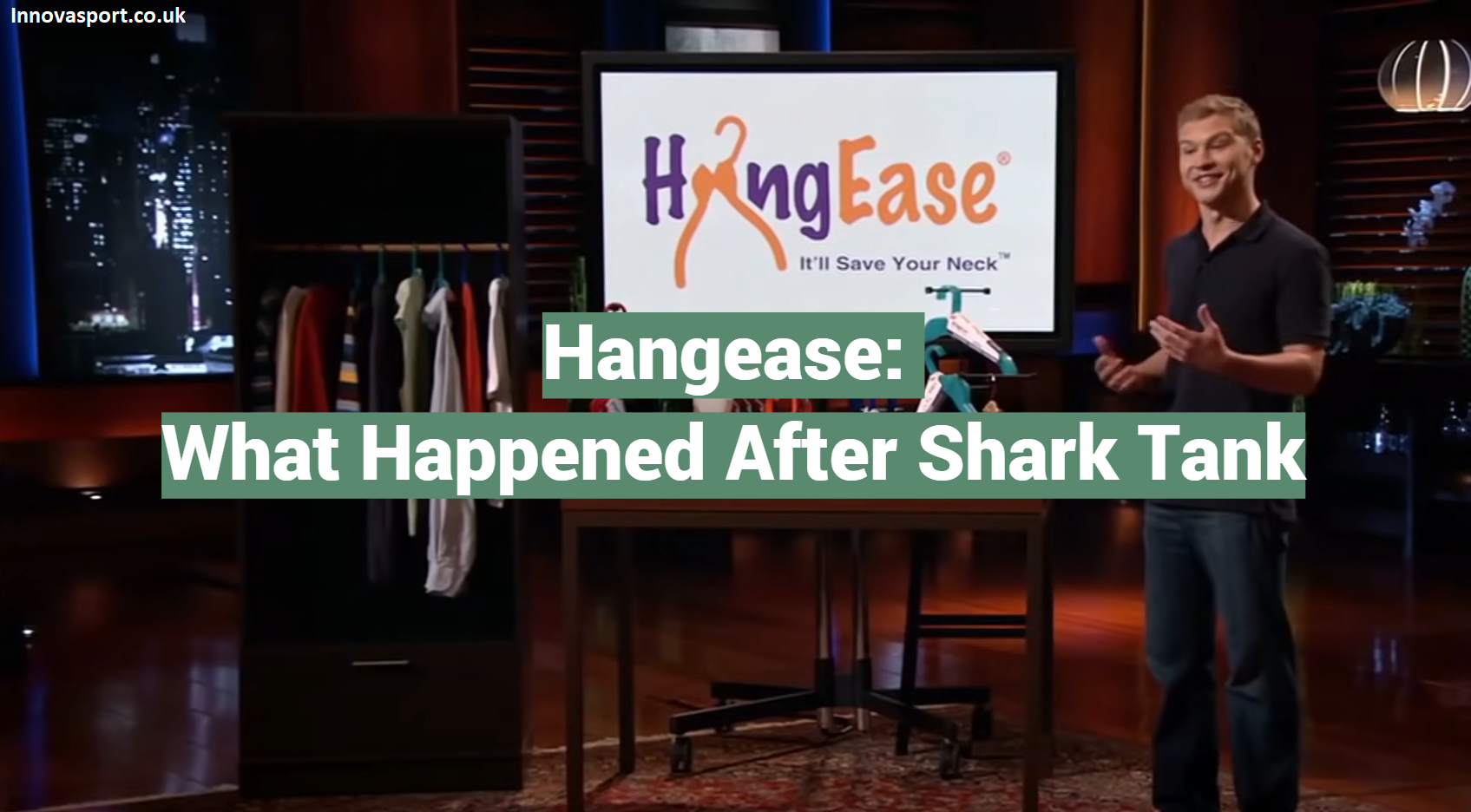
Why Did Hang Ease Go Out of Business? Hang Ease was a product with a simple promise — easier, more organized hanging storage. But a good idea isn’t always enough to build a lasting business.
Like many small consumer product companies, Hang Ease likely faced a combination of distribution challenges, limited marketing reach, and intense competition from larger, better-funded brands dominating the storage and organization space.
The rise of e-commerce giants made shelf space — physical and digital — harder to compete for without significant backing.
Small product brands often solve real problems but struggle to scale.
Sometimes the market doesn’t reward the idea. It rewards the infrastructure behind it.
Table of Contents
Quick Table
| Challenge | What Happened | Impact | Common For Small Brands? |
|---|---|---|---|
| Distribution Limits | Couldn’t secure wide retail presence | Low product visibility | Very common |
| Marketing Reach | Limited budget for advertising | Poor brand awareness | Extremely common |
| Large Competitor Pressure | Bigger brands dominated the space | Lost market share | Almost universal |
| E-Commerce Competition | Amazon & big platforms favored established sellers | Hard to rank & convert | Increasingly common |
| Scaling Difficulties | Growth required capital they didn’t have | Couldn’t meet demand | Very common |
| Consumer Awareness | Not enough people knew it existed | Low repeat purchase rate | Common for niche products |
Why Did Hang Ease Go Out of Business?
A 19-year-old walking onto one of the most watched business shows in America, pitching a product he invented as a third-grader.
A hanger — yes, a clothes hanger — that could fold in half so your shirt slides off without you stretching the collar into a sad, floppy mess. Mark Cuban leaned forward. Lori Greiner smiled. They made a deal.
And then… nothing.
If you’ve ever gone looking for HangEase online after that episode, you know what I mean. The website is gone. Social media — dead. Products — vanished. It’s like the whole thing evaporated overnight.
So what actually happened? Why did Hang Ease go out of business when it had everything going for it: a clever product, national TV exposure, a Walmart deal, and two of the most powerful investors on the planet shaking hands with the founder?
Let me break this down the way I wish someone had explained it to me the first time I looked into it.
The Backstory — Because Context Matters Here
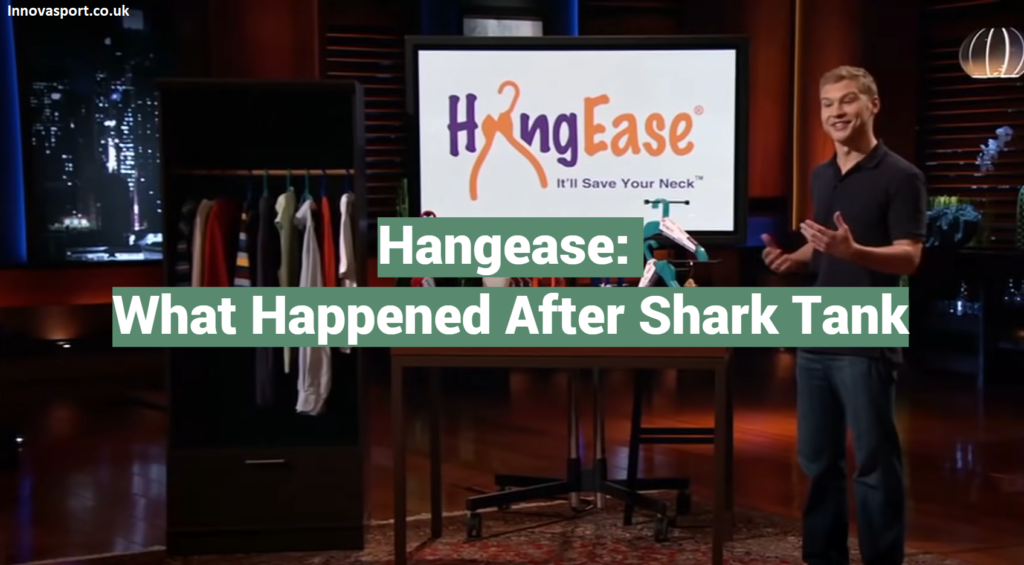
Ryan Landis invented the HangEase hanger as a school project when he was in third grade.
The concept was beautifully simple: a plastic hanger with a hinge in the middle. When you pull a shirt downward, the hinge collapses inward and the garment slides off cleanly. No more wrestling with tight collars. No more breaking cheap plastic hangers at 7am when you’re already running late.
He got a utility patent for it in 2007. He even landed a deal with Walmart. That’s not a small thing — most adult entrepreneurs with MBAs never get a Walmart shelf spot. For a kid, it was extraordinary.
But then something strange happened: the business just… sat there. For nearly seven years, boxes of HangEase hangers collected dust in storage.
No active marketing, no retail follow-through, no management. The Walmart relationship fizzled out because it wasn’t maintained.
By the time Ryan walked onto the Shark Tank stage in 2014 as a 19-year-old, he was essentially trying to resurrect a business that had been on ice since he was in middle school.
He asked for $80,000 for 30% equity. He got a deal from both Mark Cuban and Lori Greiner — conditional on the patent being solid.
That condition turned out to be everything.
The Deal That Fell Apart Before It Started
Here’s where the story gets genuinely painful to think about.
After the cameras stopped rolling, Cuban and Greiner’s teams did what they always do: due diligence. They dug into the finances, the supply chain, and most critically — the patent.
Lori had actually raised a red flag on camera, noting she’d seen similar hangers in the market. During the post-show investigation, that concern apparently grew bigger.
The utility patent from 2007 was real, but the scope of protection it offered appeared to be narrow enough that competitors could design around it without technically infringing.
In the consumer products space, a patent that can be easily worked around is basically decorative. It looks good on paper but offers no real moat.
And if the investors’ entire deal was contingent on that patent being a genuine competitive shield — which it was — then the deal was effectively dead once the legal team finished their review.
The official deal with Mark Cuban and Lori Greiner never closed.
Ryan later said he felt “crazy excited” after the taping. I genuinely believe he was. But excitement doesn’t survive due diligence when the paperwork doesn’t hold up.

The Seven-Year Gap Nobody Talks About Enough
People focus a lot on the Shark Tank deal falling through. But honestly? The seven-year dormancy before that pitch might be the more instructive part of this story.
Think about what that period cost HangEase:
- The Walmart relationship went cold. Retail partnerships don’t maintain themselves. When a product stops being actively marketed and restocked, stores move on. Walmart dropped the product, and by 2014, Ryan couldn’t even fully explain why — he thought it came down to poor marketing. That’s a painful admission.
- The market moved. In those seven years, closet organization became a full-blown industry. The Container Store expanded. Velvet slim hangers became mainstream. Space-saving multi-tiered hangers showed up everywhere for $10. By the time HangEase was trying to stage a comeback, the problem it solved was already being addressed by half a dozen other products in every price range.
- Manufacturing costs got harder to justify. The hinge mechanism that made HangEase clever also made it more expensive to produce than a standard hanger. When your competitors are selling 50 hangers for $8 at Target, your single specialty hanger has to be really compelling to justify a higher price point. And by 2014, it wasn’t clear it could be.
Seven years is an eternity in consumer products. When you go dormant, the market doesn’t wait for you.
The Product Quality Problem That Crept In
Here’s something that doesn’t get mentioned as often, but it matters.
The flexible hinge — HangEase’s whole selling point — was also its weakest physical point. Early customers reported that the hangers broke after relatively light use.
The mechanism that was supposed to make your life easier was snapping under the weight of a winter coat or after a few months of normal closet use.
In consumer products, your first impression is basically your permanent impression. If someone buys your product, tries it, and it breaks — they don’t write you a patient email asking for a replacement.
They leave a review. They tell their friends. They don’t buy again.
And that word-of-mouth damage, once started, is extraordinarily hard to reverse without serious money and a genuine product fix.
HangEase didn’t have the capital to absorb that feedback loop and come back stronger. So instead of improving the hinge and relaunching with a “Version 2.0” narrative, the problems just accumulated quietly.
The Competition Problem — And Why It Was Worse Than It Looked
Let’s be honest about the market HangEase was trying to operate in.
Hangers are a commodity. They’re one of the most brutally competitive, margin-thin product categories in retail. You’re not just competing against other “innovative” hanger companies. You’re competing against:
- Standard plastic hangers sold in packs of 100 for under $10
- Velvet non-slip hangers that consumers started buying obsessively in the 2010s
- Wood hangers for anyone who wanted to feel like their closet belonged on Pinterest
- Multi-tier cascading hangers for people trying to save space
HangEase solved a real problem — the stretched-collar problem when removing shirts. But most consumers don’t even consciously register that problem as something worth paying a premium to fix.
They’ve just… adapted. They tug the shirt a certain way. They use wooden hangers. They buy flimsy plastic ones and replace them when they break.
To win in that market, you need either a dramatically lower price point than everyone else, or such strong branding that people seek you out by name. HangEase had neither.
Its online presence was minimal, and without active marketing, there was nothing driving consumers to go find it.
What the Sharks Actually Said (And What It Reveals)
If you rewatch that episode, the Sharks’ reactions are telling.
Robert Herjavec dropped out first, saying he simply didn’t see enough market need. Kevin O’Leary — never one for subtlety — said the product “bores the crap out of me” and cited pricing concerns.
Both of these read like polite ways of saying the same thing: the total addressable market isn’t big enough to justify the investment risk.
The only two who stayed were Cuban and Greiner, and their interest was clearly conditional on the patent being a real moat. Once due diligence showed it wasn’t, the rational move was to walk away — which is what happened.
This is a pattern worth learning from: investor interest on a TV show is not the same as investor commitment. The cameras capture energy and excitement.
The term sheets come later, after lawyers and accountants have done the boring, unglamorous work of figuring out whether the story matches the reality.
Lessons Any Entrepreneur Can Take From This
I’ve thought about this story a lot because it’s genuinely instructive — not as a cautionary tale about one particular product, but as a map of how good ideas die.
Momentum is perishable. HangEase had Walmart. It had a patent. It had a working product. And it let all of that go dormant for seven years. If you have something working, you have to keep working it. There’s no “pause” button in business.
A patent is only as good as its scope. Getting a patent granted feels like a win, and it is — but the real question is whether that patent protects against the most likely competitive threats. A narrow patent in a crowded category is closer to a false sense of security than actual protection.
A TV deal is not a deal. Getting interest from Shark Tank investors, getting a handshake on camera, even getting a verbal agreement — none of that is money in the bank. Post-show due diligence kills a significant portion of deals that seem to get made on the show. You have to be prepared for that.
Consumer product margins are brutal. If you can’t manufacture your product cheaply enough to make money at the price point consumers expect, you don’t have a viable business. You have an interesting project. Those are very different things.
One product with one use case is a fragile business. HangEase solved one problem. Once that problem was being addressed by cheaper alternatives, there was nothing to fall back on. Product-based businesses that survive long term either evolve their product line or build brand loyalty strong enough that customers follow them regardless of alternatives.
Where Ryan Landis Is Now
This part is actually worth mentioning, because the HangEase story doesn’t end in personal failure — just business failure.
Ryan went on to earn his MBA from Rice University.
He built a career in luxury retail merchandising. He even filed a biotech patent. By any reasonable measure, the kid who invented a hanger in third grade turned into a genuinely accomplished adult.
The business closed. The entrepreneur didn’t. That distinction matters.

So Why Did Hang Ease Really Go Out of Business?
If I had to put it in one paragraph:
HangEase went out of business because it lost its momentum during a seven-year dormancy, came back into a market that had moved on without it, had a patent that couldn’t withstand investor scrutiny, faced manufacturing costs that made competitive pricing nearly impossible, and ultimately couldn’t secure the investment that might have given it a fighting chance.
Add in product durability complaints and a market full of cheap, functional alternatives — and survival wasn’t really on the table.
It’s a story about how a genuinely clever idea can fail not because the idea was bad, but because execution, timing, and resources never lined up at the right moment.
And honestly? That’s a more common story than most people realize.
The startups we remember are the ones that made it. For every one of those, there are hundreds of HangEases — real products, real effort, real potential — that just couldn’t hold it all together long enough.
FAQ’s
What exactly was Hang Ease?
Hang Ease was a consumer storage product designed to make hanging and organizing items easier and more efficient. It targeted the home organization market — a space that sounds simple but is actually highly competitive with dozens of established players.
Did Hang Ease have a strong customer base?
There’s limited public information available, but like many niche products, it likely had loyal early adopters who genuinely found value in it. The problem wasn’t necessarily the product — it was reaching enough of the right people consistently.
Could Hang Ease have survived with better marketing?
Possibly. Many small product companies fail not because their product is bad but because they can’t generate enough sustained visibility to build momentum. Better marketing — especially on social platforms and Amazon — might have extended their runway significantly.
Are there similar products still available today?
Yes. The home organization space is crowded with alternatives from brands like OXO, Rubbermaid, and countless Amazon private-label sellers. If Hang Ease solved a real problem, chances are another product has filled that gap.
What can small product brands learn from stories like this?
That a good product is the starting point, not the finish line. Distribution strategy, brand awareness, and financial backing matter just as much — often more — than the quality of the product itself.
Conclusion
Hang Ease is the kind of story that repeats itself constantly in the consumer product world — quietly, without much fanfare, and with very little public record left behind.
A product gets created. Someone identifies a real problem, builds a solution, and brings it to market with genuine belief in what they’ve made. And then the harder reality sets in:
making something good is only half the battle. Getting people to find it, trust it, buy it, and come back for it — that’s the other half, and it’s where most small brands quietly lose.
The home organization market looks approachable from the outside. People always need storage solutions. The demand is real and constant.
But that same demand attracts serious competition — established brands with deep distribution networks, loyal customer bases, and marketing budgets that small players simply can’t match.
What makes stories like Hang Ease worth understanding isn’t the failure itself. It’s what the failure points to:
a gap between product quality and business infrastructure that trips up well-intentioned brands every single day.
A great idea deserves a great strategy behind it. Without distribution, visibility, and capital to sustain growth, even genuinely useful products disappear.
About the Author