Why Was the Battle of Gettysburg Important? The Battle of Gettysburg, fought from July 1 to 3, 1863, stands as one of the most decisive moments in American history.
It marked the turning point of the Civil War, halting Confederate General Robert E.
Lee’s second and most ambitious invasion of the North.
Union forces under General George Meade successfully repelled Lee’s army, inflicting devastating losses that the Confederacy could never fully recover from.
The battle ended any realistic hope of European nations recognizing or supporting the Confederate cause.
It also inspired President Abraham Lincoln’s legendary Gettysburg Address, redefining the war as a fight for human equality and national unity.
Table of Contents
Quick Table
| Factor | Details |
|---|---|
| Date | July 1 — 3, 1863 |
| Location | Gettysburg, Pennsylvania |
| Union Commander | General George Meade |
| Confederate Commander | General Robert E. Lee |
| Total Casualties | Approximately 50,000 killed, wounded, or missing |
| Union Casualties | Approximately 23,000 soldiers |
| Confederate Casualties | Approximately 28,000 soldiers |
| Turning Point | Halted Lee’s second invasion of the North permanently |
| Confederate Impact | Losses were too devastating to fully recover from |
| European Involvement | Ended hopes of British or French recognition of the Confederacy |
| Pickett’s Charge | Catastrophic Confederate frontal assault on July 3rd |
| Gettysburg Address | Lincoln’s legendary speech redefining the war’s purpose |
| War’s Direction | Shifted momentum decisively and permanently to the Union |
| Legacy | Considered the most decisive battle in American Civil War history |
First — What Was Even Happening in the Summer of 1863?
By mid-1863, the Confederacy had actually been doing surprisingly well militarily. Robert E. Lee and the Army of Northern Virginia had won battles at Fredericksburg and Chancellorsville.
The Union army was demoralized. Lincoln was burning through generals. And the war was getting deeply unpopular in the North — there were draft riots in New York City literally the same week as Gettysburg.
Lee saw an opening. If he could take the war onto Northern soil, win a decisive battle in Pennsylvania or Maryland, he could potentially force the Union to the negotiating table.
He wasn’t just trying to win one fight — he was trying to end the war on Confederate terms.
“Lee wasn’t marching north to pillage. He was marching north to make the political cost of continuing the war too high for Northerners to stomach. It was a strategic gamble wrapped in a military campaign.”
And it nearly worked. That’s what makes Gettysburg terrifying to think about in hindsight.
The Three Days — A Quick Timeline of What Went Wrong (and Right)
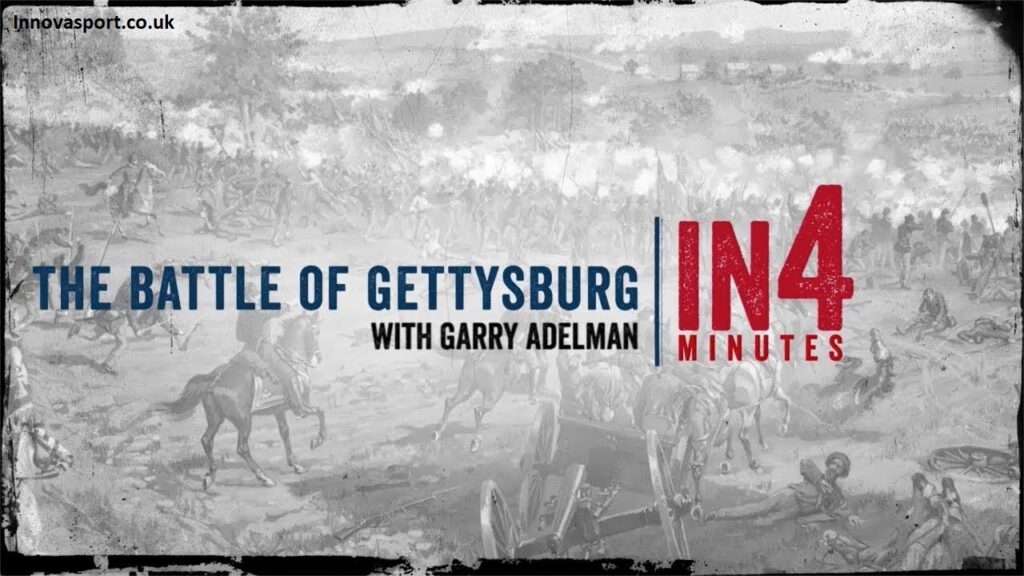
Day 1 — July 1
Confederate forces push Union troops back through town. Looks like a Confederate win early on.
But Union troops occupy the high ground — Cemetery Hill, Culp’s Hill — and dig in. This decision to hold the high ground turns out to be everything.
Day 2 — July 2
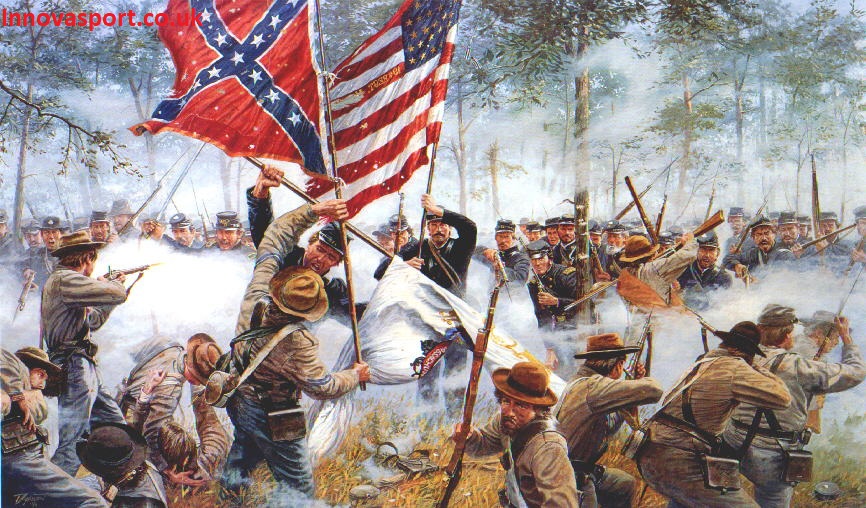
Lee attacks both Union flanks. Brutal fighting at Devil’s Den, Little Round Top, the Wheatfield, and the Peach Orchard.
Union Colonel Joshua Chamberlain and the 20th Maine hold Little Round Top against repeated Confederate assaults with a desperate downhill bayonet charge.
If Little Round Top falls, the Union flank collapses. It doesn’t fall.
Day 3 — July 3
Lee makes his most controversial call: Pickett’s Charge. Nearly 12,500 Confederate soldiers march nearly a mile across open ground toward entrenched Union positions.
The result is catastrophic for the Confederacy. Over half become casualties. Lee’s army retreats to Virginia and never invades the North again.
Why Does This Actually Matter? The Strategic Importance
Here’s where it gets interesting. Gettysburg by itself didn’t end the war — the war would grind on for almost two more years. But it fundamentally changed what was possible for each side.
- For the Confederacy: Gettysburg broke the offensive capability of the Army of Northern Virginia permanently. They lost roughly a third of their forces and their most experienced officers. Lee’s army could still defend brilliantly — and it did, for years — but the bold offensive strategy that had worked so well before was gone. No more invading the North. No more dramatic gambles to shock the Union into a peace deal.
- For the Union: Something shifted psychologically. Combined with the fall of Vicksburg the very next day (July 4, 1863), which gave the Union full control of the Mississippi River, suddenly the North was winning on multiple fronts simultaneously. The narrative flipped. The Confederacy stopped looking inevitable.
And that matters more than most people realize, because by mid-1863, Lincoln was genuinely worried about winning re-election in 1864.
His main opponent, George McClellan, was running on a peace platform — essentially, let the South go. If Lincoln loses that election, the Union makes peace, the Confederacy survives, and slavery continues as a legal institution across a significant chunk of North America.
Gettysburg didn’t win the election for Lincoln. But it kept the possibility of Union victory alive long enough for Sherman’s March and Grant’s grinding campaign to eventually make Union victory feel real to Northern voters.
The Gettysburg Address — Why a Short Speech Became Immortal
This is the part that always gets me. Lincoln wasn’t even the main speaker at the dedication of the Soldiers’ National Cemetery on November 19, 1863.
That was Edward Everett, who spoke for over two hours. Lincoln gave a 272-word speech that took about two minutes, and early reviews were mixed at best.
But Lincoln did something quietly radical with those words. He connected the battle — and the entire war — to the founding promise in the Declaration of Independence that “all men are created equal.
He essentially reframed what the war was about. Not just preserving the Union as a political entity, but fulfilling a founding promise that had never actually been fulfilled.
“Lincoln used 272 words to do what years of policy debates had failed to accomplish: he made the end of slavery the moral center of the Union cause, not just a wartime tactic.
The speech is a masterpiece of compression and rhetorical sleight of hand — and it works partly because Gettysburg gave it weight. You couldn’t have delivered those words credibly after a defeat.
But after that particular field, after those particular dead, it landed differently.
The Counterfactual: What If Lee Had Won?
I know, counterfactuals are a rabbit hole. But this one is worth sitting with.
If Lee had broken the Union line and pushed toward Philadelphia or Baltimore — the Union’s will to continue the war might have collapsed.
Britain and France, both of whom had been considering recognizing the Confederacy as a separate nation (which would have been diplomatically devastating for the Union), might have finally done so.
Lincoln’s political position at home would have become untenable.
We’re not talking about some minor historical reshuffling. We’re potentially talking about two separate nations occupying North America, one of which was constitutionally committed to the preservation of chattel slavery.
That possibility wasn’t just theoretical in 1863 — it was the operating scenario that Confederate leadership was betting on.
Common Misconceptions People Have About Gettysburg
Things I Got Wrong Before Visiting
- It wasn’t planned. Both armies literally stumbled into each other. Confederate soldiers had heard there were shoes in Gettysburg — supplies were desperately short — and the whole battle grew from that accidental encounter.
- Lee wasn’t an idiot for Pickett’s Charge. His tactics had worked before. He’d beaten Union commanders with bold moves repeatedly. Overconfidence, maybe — but not stupidity.
- Meade didn’t “finish the job.” Critics hammered Meade for not aggressively pursuing Lee after the battle. But his army had also taken enormous casualties. The decision to let Lee retreat was deeply controversial and Lincoln was furious — but it’s more complicated than it looks.
- The Gettysburg Address wasn’t universally admired immediately. Some newspapers called it embarrassingly short and insufficient for the occasion. History has a way of reversing those initial verdicts.
What Visiting Gettysburg Actually Teaches You
If you ever get the chance, go. I’d recommend the Museum and Visitor Center first — their film and cyclorama give you the spatial context you need before walking the ground.
Then hire a licensed battlefield guide if you can; the self-guided stuff is good, but the guides give you details that no sign will ever capture.
Walk up Little Round Top. Stand at the angle where Pickett’s Charge ended. Drive out to the Virginia Memorial and look back at Cemetery Ridge from the Confederate starting point.
That mile of open ground hits differently when you’re standing in it.
The thing that got me most, honestly, wasn’t the famous spots.
It was the artillery park — rows of cannons lined up along the ridge — and realizing that the deafening, hours-long artillery barrage that preceded Pickett’s Charge could be heard as far away as Pittsburgh.
Imagine living nearby and hearing that for hours and not knowing what it meant.
The Long Shadow
Gettysburg’s importance isn’t really about military tactics, as interesting as those are.
It’s about a moment when the future genuinely could have gone multiple directions, and it went one particular way because of specific decisions made by specific people on specific ground.
It’s about a 34-year-old college professor from Maine who ordered a bayonet charge when his regiment ran out of ammunition, because retreating meant the end of everything above him on that hill.
It’s about Lee making one call too many that relied on his men to be invincible, and them being human instead.
It’s about Lincoln standing in the cold November air four months later, in two minutes, articulating what 600,000 deaths were supposed to mean.
FAQ’s
Why is Gettysburg considered the turning point of the Civil War?
Gettysburg stopped Confederate General Robert E. Lee’s most ambitious invasion of the North. The catastrophic losses suffered by the Confederate army permanently crippled their offensive capabilities, shifting the war’s momentum decisively and irreversibly in favor of the Union.
What was Pickett’s Charge and why did it fail?
Pickett’s Charge was a massive Confederate frontal assault on July 3rd involving nearly 12,500 soldiers crossing open fields under devastating Union fire. It failed catastrophically due to exposed terrain, superior Union positioning, and overwhelming defensive firepower that decimated Confederate ranks within minutes.
How many soldiers died at the Battle of Gettysburg?
Approximately 50,000 soldiers were killed, wounded, captured, or reported missing across three days of brutal fighting, making Gettysburg the bloodiest single battle ever fought on American soil throughout the entire Civil War.
Why was the Gettysburg Address so significant?
Lincoln’s brief but powerful speech redefined the entire purpose of the Civil War, framing it no longer merely as a fight to preserve the Union but as a sacred struggle for human equality and the survival of democratic government.
Could the Confederacy have won at Gettysburg?
Many historians believe early Confederate advantages on Day One presented genuine winning opportunities. However, delayed attacks, miscommunication between generals, and strong Union defensive positioning on Cemetery Ridge ultimately prevented a Confederate victory.
Conclusion
The Battle of Gettysburg was far more than a military engagement fought across three brutal summer days in a quiet Pennsylvania town.
It was the moment the American Civil War fundamentally changed direction, and with it, the entire future of the United States as a unified and democratic nation.
When General Lee’s battered army retreated southward on July 4th, 1863, the Confederacy’s dream of independence and international recognition retreated with it, never to fully recover.
The human cost of those three days remains almost incomprehensible.
Nearly 50,000 soldiers were killed, wounded, or went missing, leaving behind a landscape so soaked in sacrifice that it demanded acknowledgment at the highest level.
Abraham Lincoln answered that call with the Gettysburg Address, a speech so perfectly crafted and emotionally resonant that it continues to define American ideals of equality, democracy, and national purpose more than 160 years later.
Gettysburg also serves as a powerful reminder that the course of history can change within a matter of days, decisions, and individual acts of courage or miscalculation.
The battle is studied, debated, and revisited not simply as a historical event but as a profound lesson in leadership, sacrifice, and consequence.
About the Author